
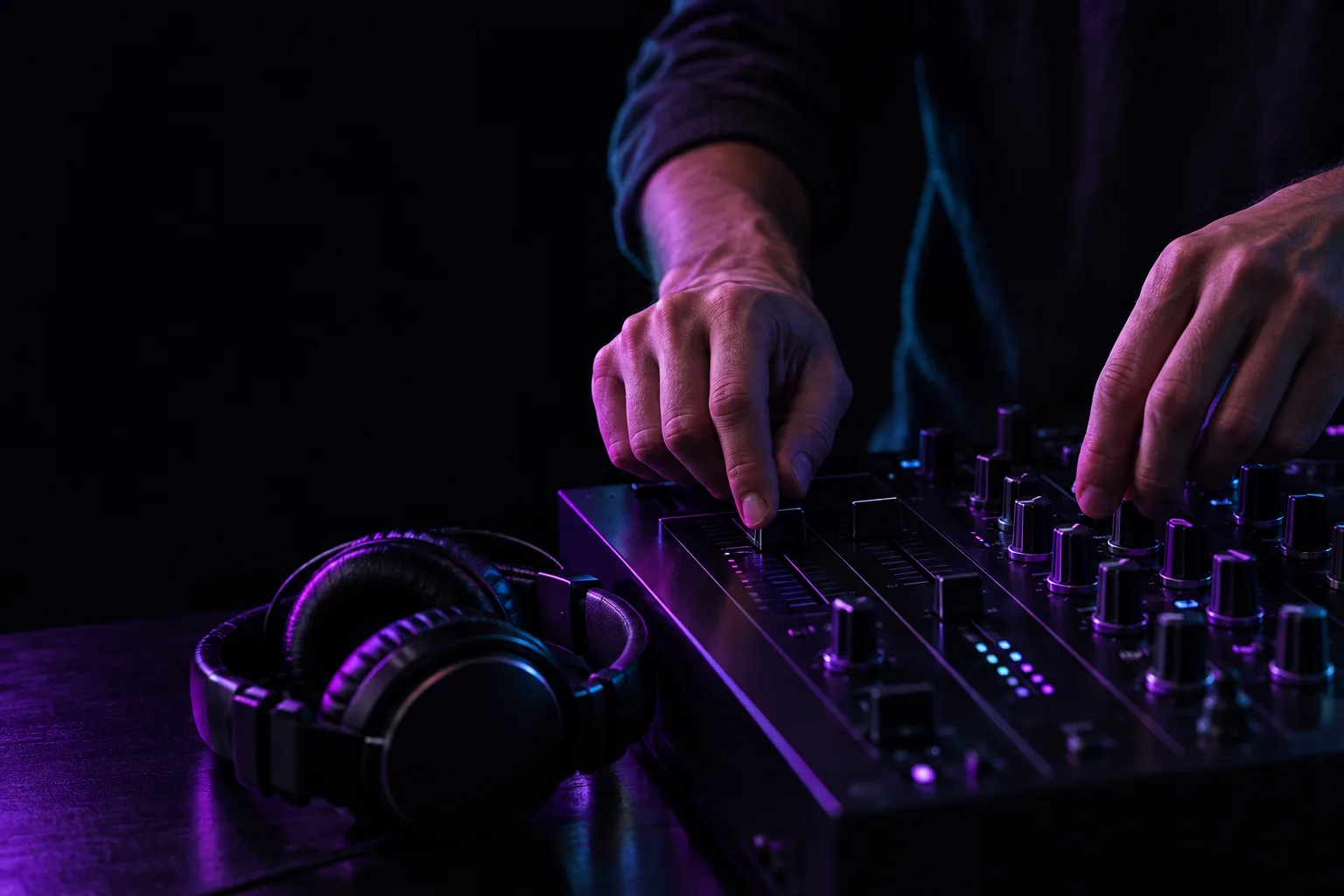
Follow the signal
Every DJ setup is the same shape: sources feed a mixer, and the mixer feeds the speakers.
Your sources are decks: media players, turntables, or the two virtual decks in software like Audya. Each one feeds its own mixer channel. Inside a channel, audio passes through the same controls in the same order, then joins the other channels at the master output.
- 01Trim (or gain) sets how hot the track enters the channel.
- 02EQ shapes the high, mid and low frequencies.
- 03The channel fader sets how much of that channel reaches the mix.
- 04The crossfader blends between the two sides.
- 05Master sends the mix to the main speakers; booth sends a separate feed to the DJ's monitor.
The crossfader curve decides how quickly one side fades in as the other fades out. A smooth curve suits long blends; a sharp curve cuts in almost instantly and suits scratching and quick cuts. Brands label and orient the curve control differently, so learn the idea rather than a knob position. In software you can often take a deck off the crossfader entirely: in Mixxx, a deck set to the centre orientation ignores the crossfader [1].
Headphone cueing lets you hear a track before the room does. Press the channel's cue (PFL, pre-fader listen) button and that channel plays in your headphones whatever its fader is doing. A cue-mix knob blends between the cued channel and the master mix, and split cue puts the cue in one ear and the master in the other.